Have you ever logged your mood or energy or how you feel in an app, saved it and wondered what are you supposed to do next? You've put how you feel, you know today is difficult, but knowing that alone doesn’t tell you what might help you get through the rest of the day.
That’s the question I’m trying to answer with Synkra. Synkra is a women’s wellbeing companion that offers a reflection and a suggested care action based on your check-in. It can also bring in relevant context from Apple Health to help shape that response. With enough check-ins, personal patterns can begin to emerge over time. This offers two kinds of value:
How to understand your mood and energy without keeping a detailed journal
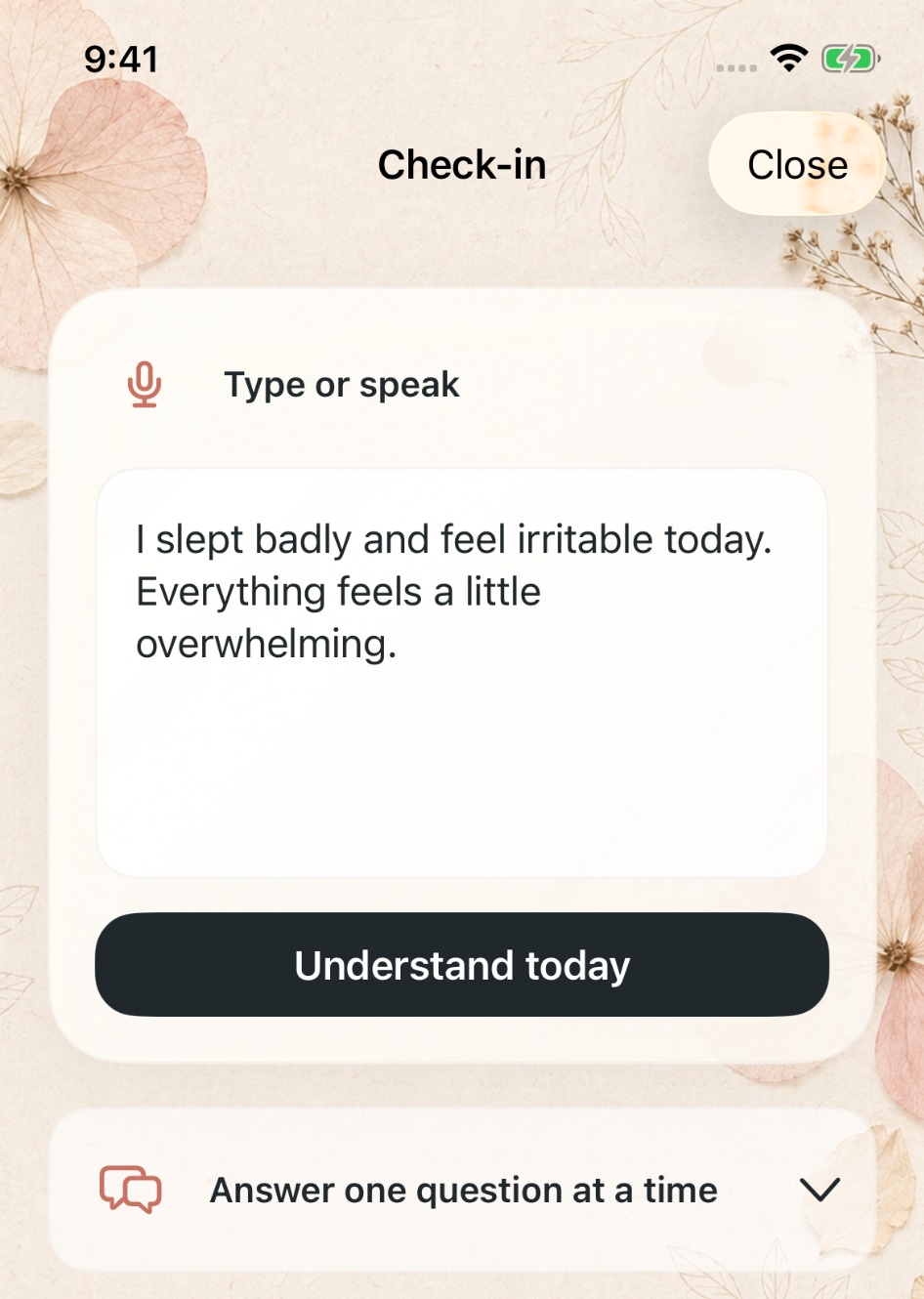
A check-in can be brief: you might describe how you feel, what your energy is like and anything about the day that seems relevant. If you’re struggling to find the words, Synkra offers a guided check-in to help you get started. It could be as simple as: “I feel tired and distracted. The morning has been rushed with the school run and I have several meetings ahead.” That doesn’t explain everything, but it gives you a moment to pause and something you can return to.
Once a day might be all you have time for and that’s fine. But it can be hard to capture a whole day in one check-in. A rushed morning, a settled afternoon and an exhausting evening can each feel quite different. With Synkra, you choose whether to check in once a day or a few times as the day unfolds. You don’t have to squeeze everything into one entry or keep a detailed journal. Each check-in adds to the picture of your experience, helping Synkra offer more personal reflections and care actions that fit how you’re feeling.
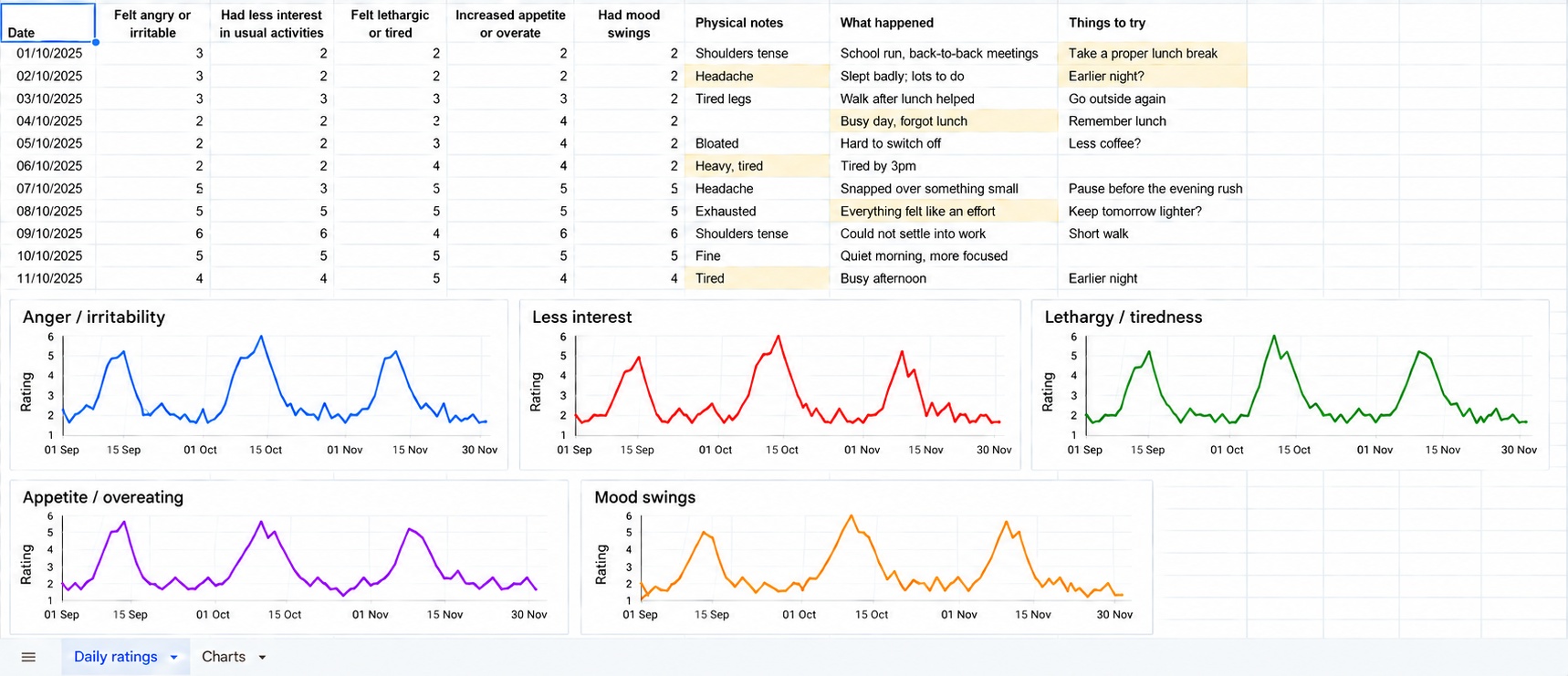
I started Synkra after my own tracking system became a messy spreadsheet. It helped me notice recurring changes in my energy, mood and how I felt physically. Over time, I began to see that some of those changes were happening around my luteal phase. That observation changed how I understood my experience and how I approached looking after myself. But recording everything, then trying to make sense of it, asked a lot of me on the days when I had the least to give, especially when I needed to spend about 20 minutes each day just answering the questions. I wanted a simpler way to bring that awareness into everyday life.
What can you get from your first check-in?
You don’t need an established pattern to receive a reflection and a suggested care action in Synkra. The reflection helps you consider what you’ve shared and the care action offers one practical thing you could try right now. If you’re exhausted and your calendar is full, Synkra might suggest moving an optional meeting. If making dinner feels like one more demand, it might suggest choosing an easier meal or asking for help.
Generative AI makes it possible to offer suggestions shaped by your context, rather than a fixed response to every difficult day. But moving a meeting may be impossible or asking for help may not be an option. Context such as sleep and activity data from Apple Health can help make a suggestion more relevant, but you know your circumstances best. You decide whether to try it, adapt it or leave it.
How does Apple Health help personalise a reflection and care action?
What you share in a check-in is one part of the picture. If you choose to share information from Apple Health, Synkra can consider it alongside your own words. For example, if you describe low energy after a short night’s sleep, the reflection might suggest that limited sleep could be contributing to how tired you feel, without assuming it explains everything. [1] A care action might then suggest a gentler wind-down that evening, such as putting your phone aside and reading something you enjoy before bed. [2] Bringing these details together can help shape a response that feels more relevant to your day.
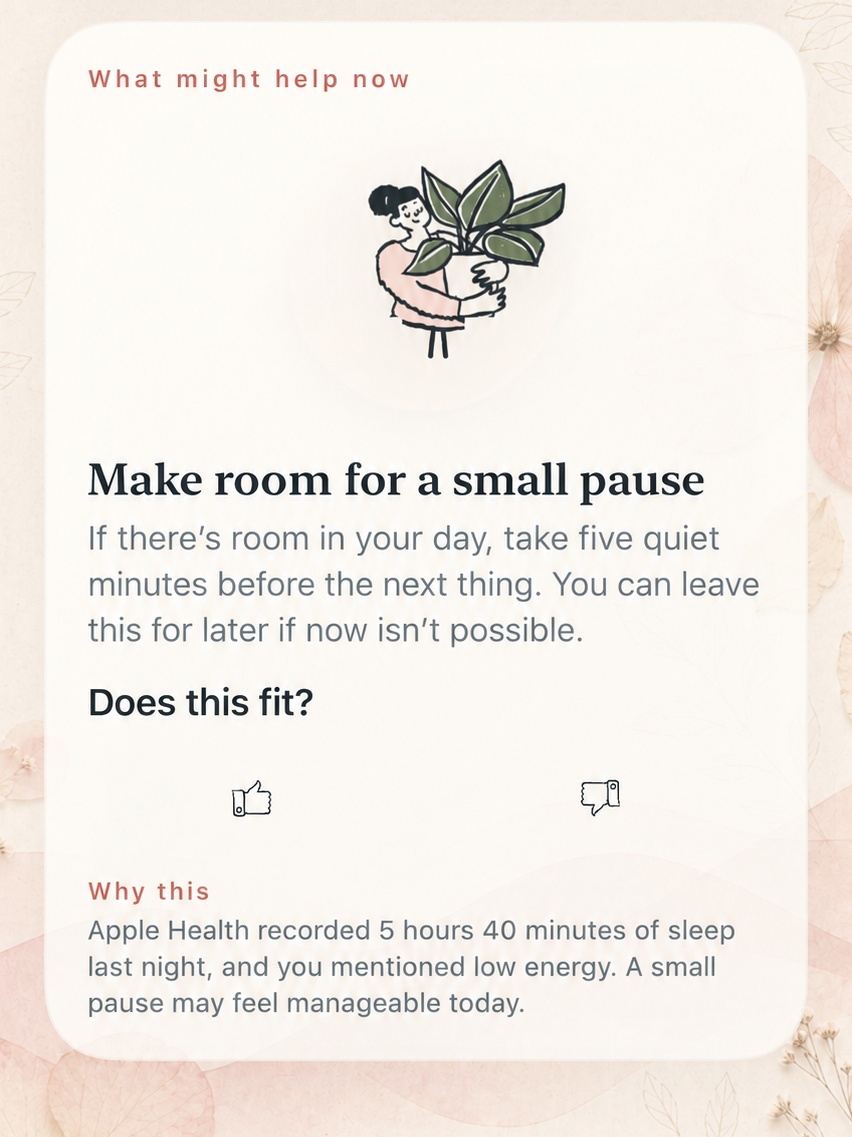
For me, this is an important part of personalisation. Bringing your own words together with relevant health context can make the reflection and care action more grounded in what’s happening for you.
How do repeated check-ins become personal patterns?
Individual check-ins capture moments, while repeated check-ins give Synkra information from which personal patterns can begin to emerge.
You may start to recognise experiences that recur in your mood, energy or wellbeing. And that can give you something to explore or something to keep in mind when making a decision. It takes enough information to begin seeing those patterns and there isn’t a fixed number of days I can promise here. Even when a pattern emerges, it needs room for exceptions; because two things happening together doesn’t establish that one caused the other.
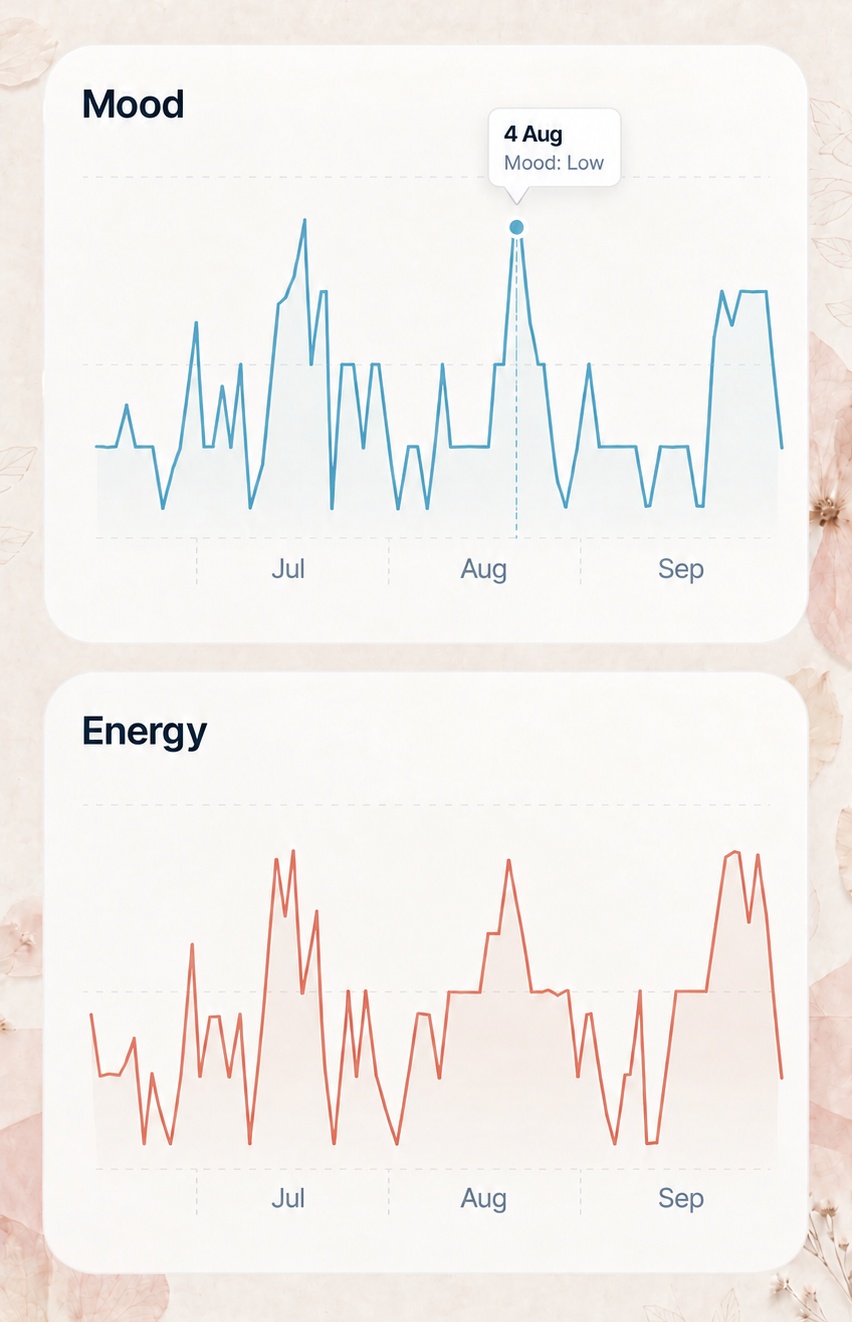
Here is an example of my patterns in mood and energy. In my own tracking, looking at those patterns alongside my cycle helped me notice recurring days of low mood and tiredness around my luteal phase. It helped me understand how much these changes were disrupting my everyday life. I’d been living with them for over two decades.
What if tracking itself starts to feel like work?
For a check-in to work, you have to stop and notice how you feel, then decide what you want to share. If you’ve ever abandoned a tracker before, it’s worth considering what made it difficult to keep using. Was recording everything too much? Did you know what to do with the information afterwards? Did it offer anything useful before you had built up a long history? These are the questions I keep coming back to when building Synkra. I wanted to reduce the effort of recording and interpreting, while giving each check-in a purpose. A brief reflection and one manageable action should give you something to assess now, alongside the possibility of understanding more over time.
A few minutes to pause and check in with yourself
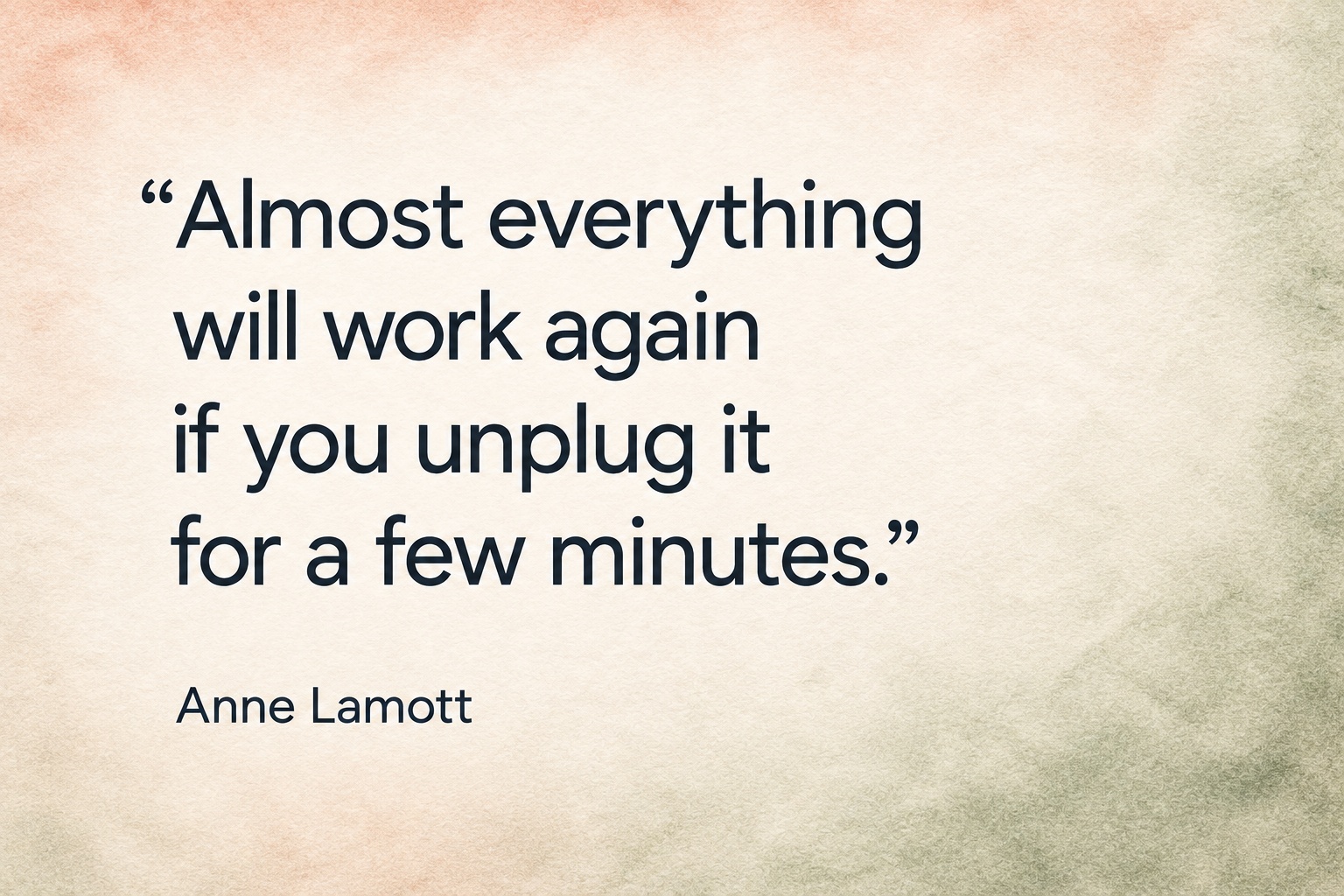
When the day is full of things that need your attention, it can be hard to notice how you’re doing. A brief check-in with Synkra can give you a few minutes to step out of that rush, put what you’re feeling into words and turn some attention towards yourself. You can share as much or as little as you have the capacity for. I deliberately designed that pause to offer something useful straight away; you get a personal reflection and one manageable care action, giving you something to consider as you return to your day. Here is a quote from Anne Lamott I read in a newsletter that stayed with me.
Does cycle-aware wellbeing require cycle tracking?
Cycle context is optional in Synkra and when you choose to include it, it sits alongside your own observations and the circumstances of your life. I wanted it to add context, without becoming a catch-all explanation for every change in how you feel. Noticing a connection in my own experience was useful to me. That doesn’t mean everyone will notice the same thing or that every difficult day needs a cycle-related explanation. A ‘phase’ label e.g. ‘luteal phase’ shouldn’t decide what you’re capable of doing.
What we’re developing next…
Two people can have the same poor night’s sleep and very different options for getting through the day. Being a working mum of two has made me particularly aware of this:
Advice can be reasonable and still feel impossible to use.
Synkra already considers circumstances you share in a check-in. In the next version, I’m developing how it takes everyday constraints into account, so suggestions better fit the time, support and flexibility available to you. The question guiding that work is simple: does this make sense for the day this person is having?
Completing a check-in tells us that someone used Synkra. Whether it felt relevant, manageable and helpful tells us more. That’s what I’m aiming for: a moment of recognition, a little more context and one practical thing you could try. If you want somewhere to begin today, ask yourself: ‘What feels manageable, given how I feel and what the day requires?’ Understanding your patterns takes time. Each check-in can still offer something useful along the way.